Author: Cai


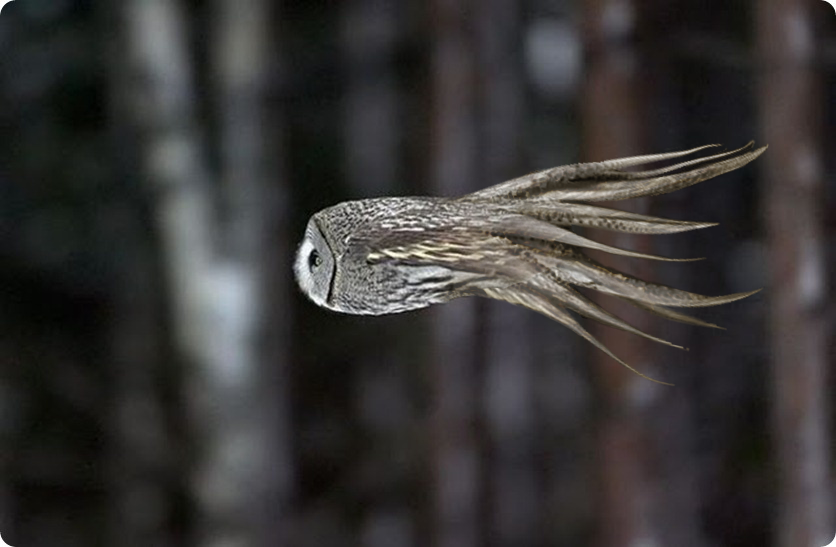
Real Myst book
This makes me pretty happy. Mike Ando has created a real, working Myst linking book.
Fix the Photoshop CS4 layer-dragging crash bug in Mac OS 10.8 Mountain Lion
This has been plaguing me for a while since I updated to Mac OS 10.8. Dragging layers in the layers palette of Photoshop CS4 would cause an immediate crash to desktop. Finally found a solution in this thread which worked.
Solution: turn off the OS power-saving graphics switching.
It's the checkbox at the top of the Energy Saving preference pane:

You'll need to ensure that it's unchecked and probably restart after that.
Now I can drag layers all day long.
Closure review

Since Braid, 2D indie puzzle platformers have had somewhat of a resurgence (to put it mildly). Typically with such a release, we expect the game to have some unique, mind-bending mechanic, sport either retro pixels or hand-drawn art, and to be "atmospheric". Closure fits snugly into this paradigm. Going in, I was worried I'd be trudging through it, rapidly losing interest as the novelty wore off as has happened before with indie puzzlers. But this didn't happen; Closure grabbed me and, through its excellently designed levels and well-crafted difficulty curve, lead me through to completion in just a few play sessions.
Like many of its indie ilk, Closure's specific draw is its clever mechanic. In Closure, the world only exists when you can see it. Unfortunately for you, it's also in almost complete darkness. Patches of light are provided by portable glowing orbs and occasional adjustable spotlights. While you carry an orb, a path stretches out in front of you, but drop that orb and step out of its pool of light and you'll fall into nothingness. Come to a wall that's too high? Place your orb so as to leave the top in shadow and you can get over it easy. A spotlight tracking up a pillar provides an elevator. Tyler Glaiel, Closure's designer, explores strange possibilities revealed by this simple idea.
Reclaiming atheism
What with the way the world is at the moment, I've been thinking a lot about social justice. I find myself confronted with sexism, homophobia, and even racism, with increasing frequency both offline and online. Possibly it's just because I'm becoming more conscious of these things as I become more educated about the world, myself and the power dynamics therein. But even empirically it seems like the dark forces are massing.
Recently, we've seen extreme misogyny coming from both sides of the Atlantic in unrelated incidents. Homophobia, racism and religious bigotry are everywhere we look. And that's just in the last few days, and these are far from isolated incidents.
At university, one of the places I found camaraderie was in the newly founded atheist society. Here I found people who celebrated rationality, free thinking and evidence-based argument. The society, too, was not (just) about drunk philosophising and debunking. In our inaugural year we lobbied the union, we protested antisemites, we collected money for AIDS charities, we specifically promoted interfaith dialogues. We were awesome.
But after university, much to my chagrin, some of the largest atheist communities I found outside the bubble were weird maelstroms of assholery. All those vices for which I thought a clear head would hold no hiding place, were still rife.
Registering to vote as an overseas US citizen
I've recently been pursuing the possibility of voting in the upcoming US presidential election, since I am a US citizen. The trickiness is that I have never lived in the US but am a citizen by virtue of my parent who was born there.
The UOCAVA protects absentee voting rights of some citizens overseas, including those who have never lived there.
Here's where I've been looking; perhaps it will help you if you're also considering voting absentee.
(Not) the future of interaction design
This is kinda old, I think, but it's pretty great. A rant by Bret Victor on the Future of Interaction Design.
From the rant:
... There's a reason that our fingertips have some of the densest areas of nerve endings on the body. This is how we experience the world close-up. This is how our tools talk to us. The sense of touch is essential to everything that humans have called "work" for millions of years.
Now, take out your favorite Magical And Revolutionary Technology Device. Use it for a bit.
What did you feel? Did it feel glassy? Did it have no connection whatsoever with the task you were performing? ...
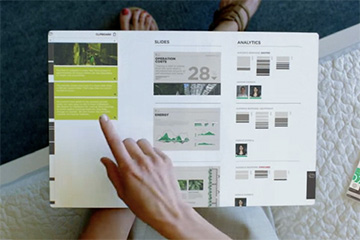
Go read the rest!
The Human Bible
Time for another podcast recommendation!
This time it's for Robert M. Price's show The Human Bible. It's a show where theologian Dr. Robert M. Price discusses topics in biblical criticism and answers listener questions using his vast knowledge of biblical and Christian history. Best of all, he comes from a secular perspective, understanding the text as a human creation, not one inspired by a god. And yet as a former Baptist pastor he has insight into the biblical literalist mindset.
Bugs as narrative
I want to describe an interesting experience I had recently. Something which completely changed my experience of a piece of art and something which is almost unique to the medium of video games.
The other day I was pointed towards Souvenir, a work-in-progress from MFA students Robert Yang, Mohini Dutta, and Ben Norskov. In the creators' words:
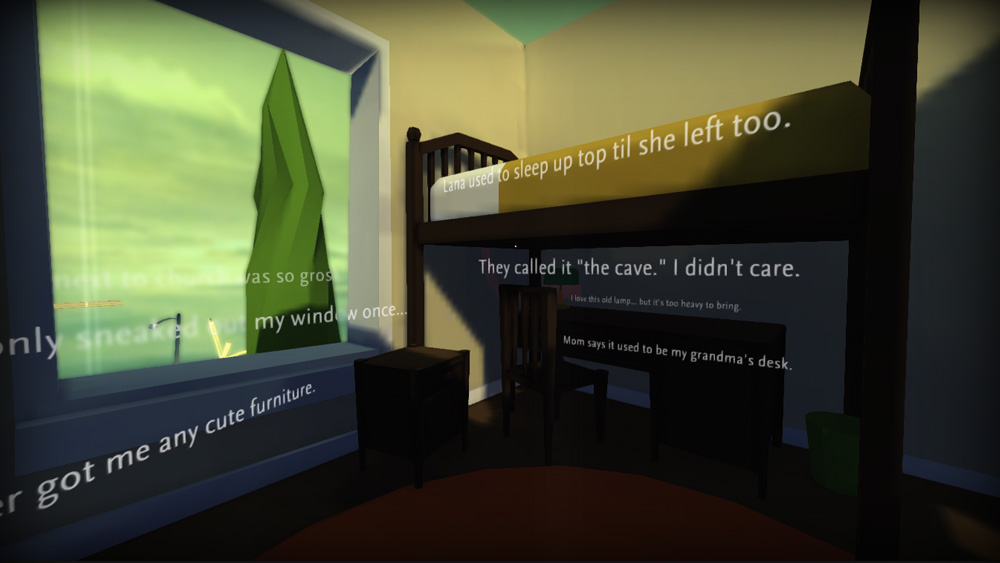
Souvenir is a first-person video game about growing up and leaving home. The disorientation of becoming an adult is reflected in the surreal M.C. Escher-inspired world with multiple gravities.
Sounds like something I'd want to check out!
I loaded up the game, and I'm presented (after some initial confusing elements) with a house decorated with floating fragments of memory.
"Is science fiction coming to Africa?"
Despite the weird title, this is a pretty interesting show from the BBC, presented by Lauren Beukes.
The BBC sometimes randomly removes its programs from online, so I'll also post it here. (Apologies for any random interface sounds. Soundflower is the new radio-casette player.)