Recent posts (page 11)
"Have one fewer child"
I’ve been looking for suggestions of individual actions one can take to reduce CO2 emissions. In particular, ones which actually make a big difference (unlike, e.g., switching to LED lightbulbs). Everywhere I look, all I see is “have one fewer child” dwarfing all other actions by effectiveness. It’s all anyone talks about.
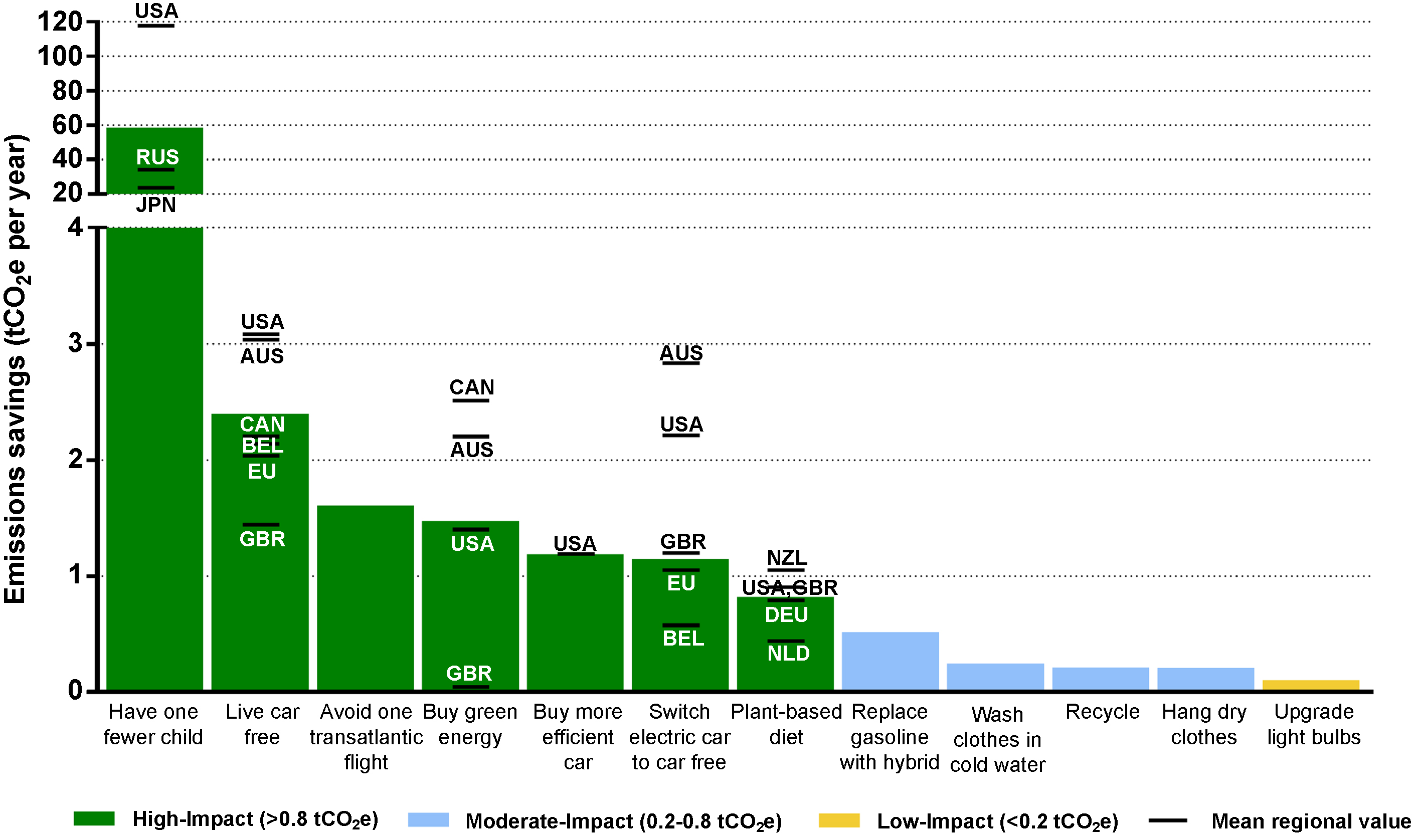
The Web is full of figures like this one. It shows the one-fewer-child recommendation being equivalent to about 60 t/y, where the next-best options like “sell your cars”, “stop flying” or “be vegan” are mostly in the 1–2 t/y range. So high, they had to clip and compress the range on the graph so you could even see anything else. That looks pretty stark. That figure is so high, it seems as if nobody could ever hope live sustainably if they had even one child. They might as well be taking a long-haul flight every 10 days for the rest of their life! Now, we definitely shouldn’t discount conclusions just because they are surprising or uncomfortable, but we should scrutinise them. That feeling of “…really?” is the first hint something might not be right.
Poster at CogSci 2021

Today I’m at the 2021 conference of the Cognitive Science Society, presenting a poster about a new, grounded measure of semantic similarity between concepts. Alongside the poster, here is a web tool I made for computing distances between 800 million concept pairs.
Unsatisfying
Every now and then when I find something online which I want to remember or show to somebody — usually an image or a video — I save it in a text file; one per person. Literally kilobytes of the stuff. And even more occasionally, I look back through those text files, and post something I find there on this site. (At this rate it’ll be the year 3888 before I get through it all.)
This is one such thing:
Chaos
Triple pendulums (pendula?) with slightly different starting conditions.
From this tweet.
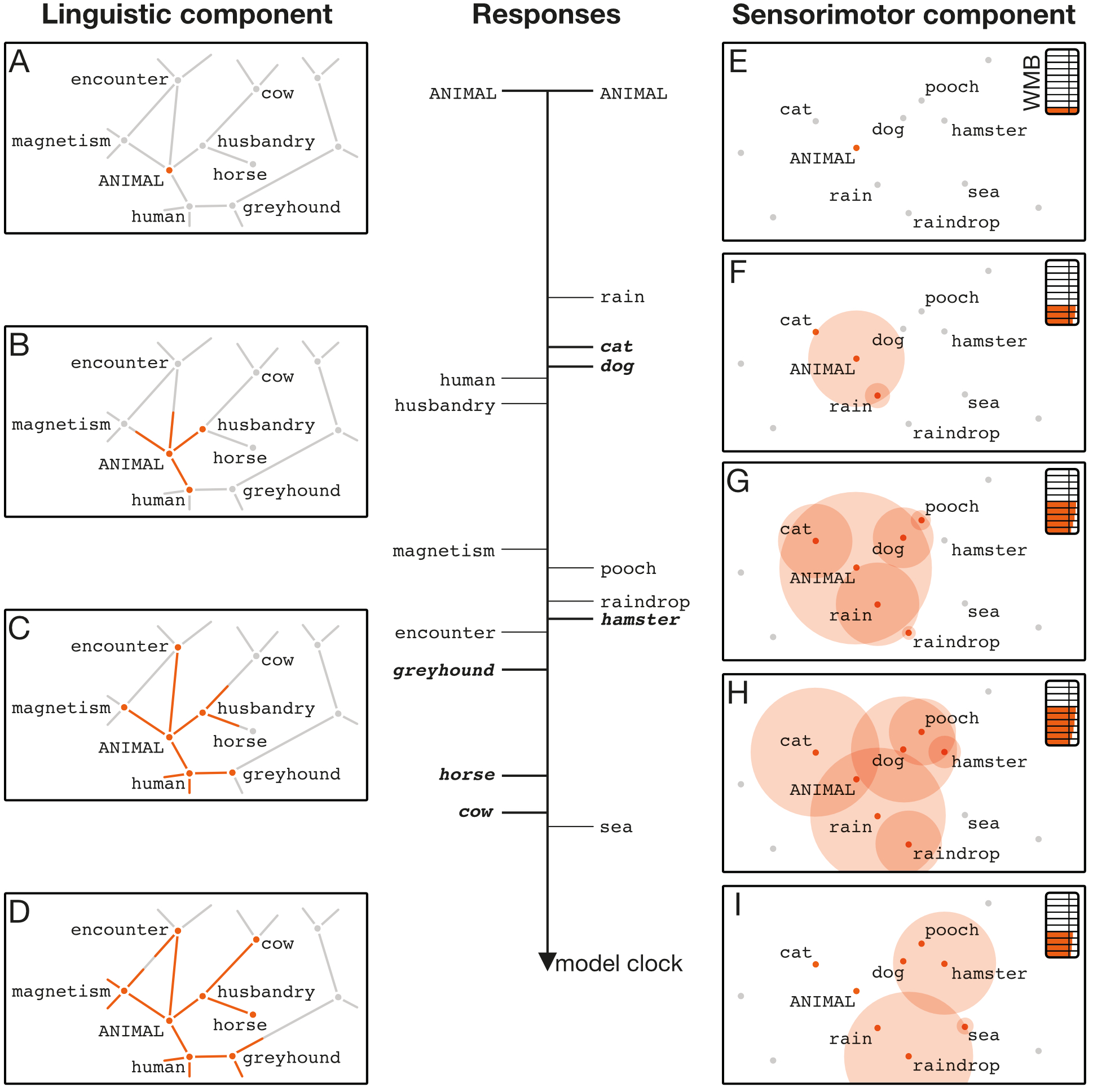
New preprint: "Linguistic Distributional Knowledge and Sensorimotor Grounding both Contribute to Semantic Category Production"
My colleagues Briony Banks, Louise Connell and I recently submitted a paper reporting research we’ve been doing at Lancaster University over the last year.
Needless to say, the Covid-19 lockdowns in the UK have been a substantial impediment to this work, so it’s really good to see it finally complete.
Rotary Cellphone

Just look at this. A cutting edge communications device from an alternative 1950. But designed and fabricated by a person on their workbench, like the raddest cyberpunk street tech.
The creator, Justine Haupt, actually sells them in kit form. But watching her guided build instruction video makes me think it’s a little beyond my skill level with a soldering iron.
Actually, this (hour long!) build video is really worth watching. Not only does it detail the creator’s design philosophy, she’s also really good at explaining the history of her design and the reasons behind many decisions.
Ed Brayton
I was sad to hear of the death of Ed Brayton a few days ago. He was a humanist and secular community leader, blogger, journalist and board member for the Center for Inquiry, Michigan. Following a long battle with illness, he checked himself into hospice care, and died comfortably a few days later.
Who Framed Roger Rabbit
Check out this amazing video of Bob Hoskins clowning around on a blue-screen stage to do the Toon Town scene of Who Framed Roger Rabbit. Early blue-screen cinema, I guess, so he doesn’t even really have props or sight guides to play off against.
I can’t remember where I saw this, possibly Important If True, back when that was a thing.
Political alignment
Speaking of Mario:
Thanks to Art House Politics for making me lol.
Super Mario Brothers
Note: video contains immediate profanity.
This obviously isn’t mine, and my guess is it wasn’t made by this person either. (If you know the providence, please comment or contact!)