Posts tagged with “my stuff”
The Importance of Atheism
Edit 2023-07-24
I’m including this post here so I can link to it. Did I make this poster when I was like 19? Yes. Would I make it and distribute it today? No. A lot has changed in the world, and in me.

A poster I designed for Warwick Atheists to advertise a series of talks promoting and exploring topics in atheism, agnosticism and antireligion. This poster got the society into some trouble.
Squowl


Y♥︎LO
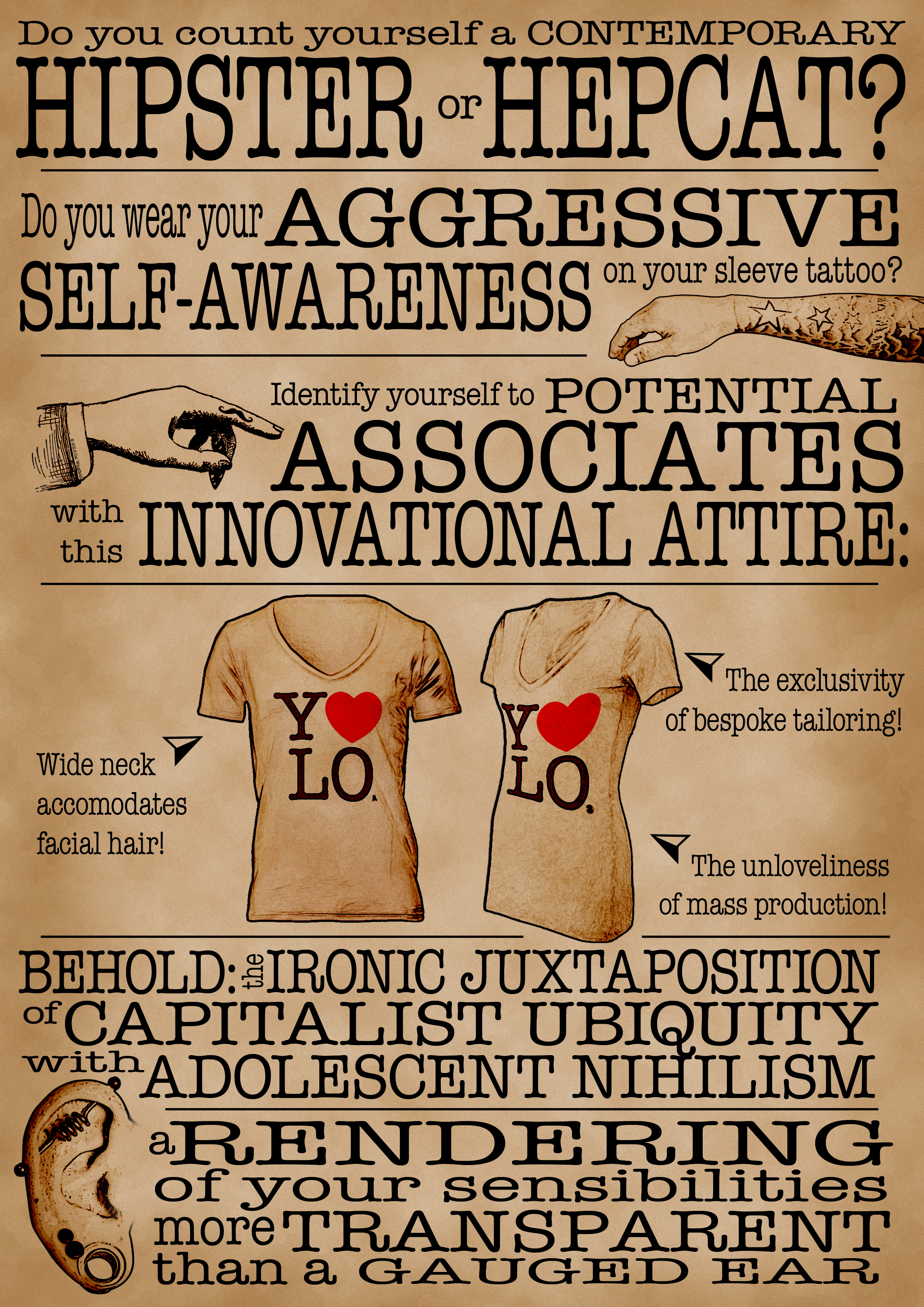
To my friends who have sleeve tattoos, gauged ears or drawn-on moustaches, please don’t take this seriously <3
Podcast Viewer
I made a tool to convert a podcast’s RSS feed into a webpage on which episodes can be easily streamed.
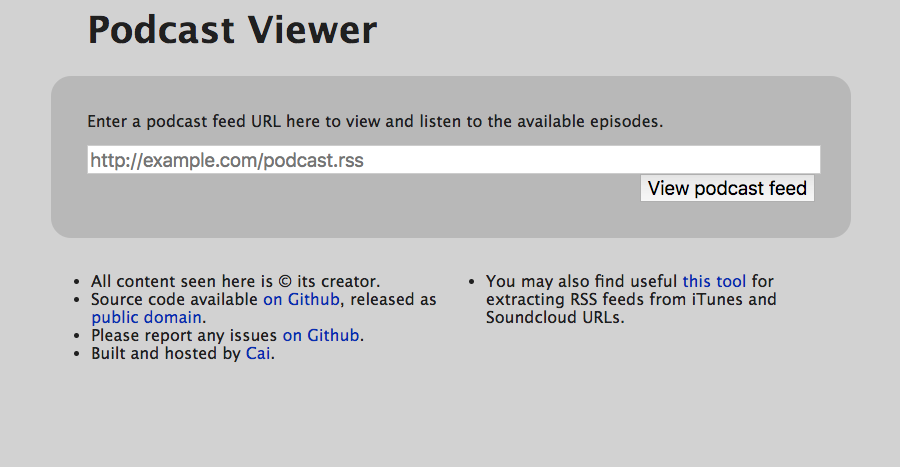
When you visit the page, you’ll see a box in which to paste the RSS feed’s URL:
Stick in a feed’s RSS URL, and you get all available episodes in a list, reverse chronologically by release date:
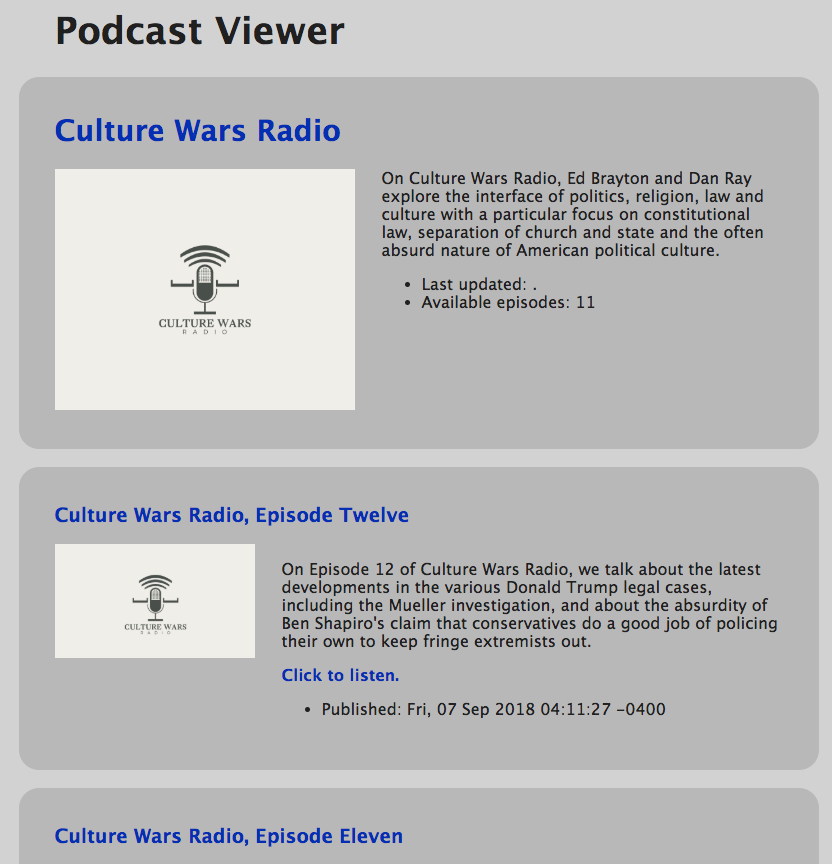
Titles are links taken from the feed’s metadata. Images are hotlinked from the host. Click-to-listen links bring up an embedded player:
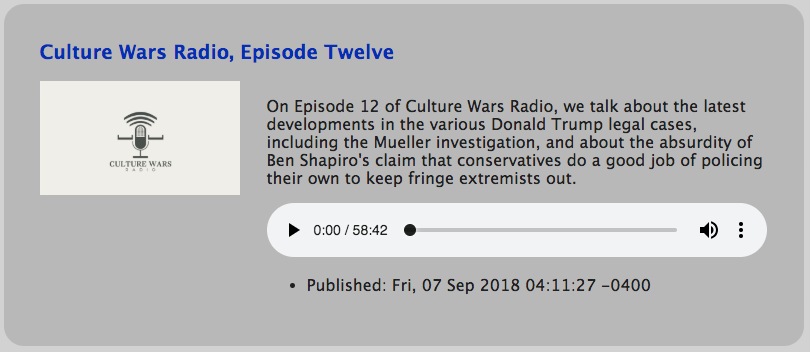
The feed is stored in the page’s URL, so it should be sharable. Currently no way to identify a given episode, but you should be able to do that with the episode title links, which should go back to the source.
Source code is released to the CC0 public domain, and can be found on Codeberg, where you can also report bugs or help me make it better.
If you use it, let me know!
Poster at CogSci 2021

Today I’m at the 2021 conference of the Cognitive Science Society, presenting a poster about a new, grounded measure of semantic similarity between concepts. Alongside the poster, here is a web tool I made for computing distances between 800 million concept pairs.
New preprint: "Sensorimotor distance: A fully grounded measure of semantic similarity for 800 million concept pairs"
Together with my colleague and lab PI, Louise Connell, I have developed a new measure of semantic distance between concepts. It is based on the senses and body parts involved in experiencing those concepts — in other words it is fully grounded in sensorimotor experience. This sets it aside from other measures of semantic distance, such as those based on distributions of words in language, on encyclopaedic databases, or on lists of properties or features. It also is fairly comprehensive (thanks to the expansive norms collected by colleagues), with distances available for nearly 800,000,000 pairs of concepts.
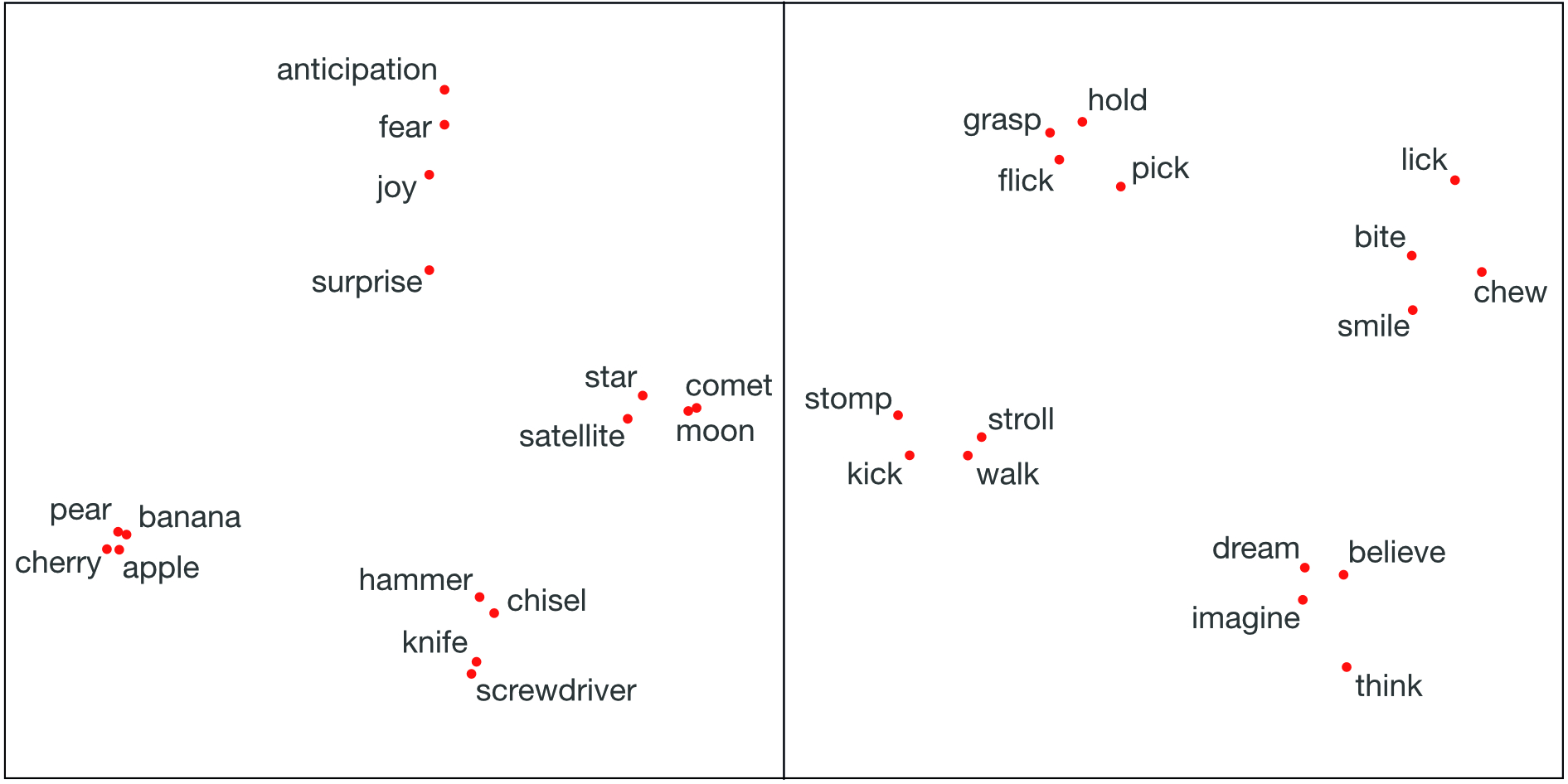
Left panel: select nouns for tools, emotions, fruit and celestial objects. Right panel: select verbs for leg, hand, mouth and cognitive actions. Within each panel, positions are based on sensorimotor distances between concepts, transformed into two dimensions using Sammon mapping.
The measure is described in a new preprint, and you can search, visualise and play around with the distances (e.g. the above image) using an online app I also developed.
Let us know if you do anything cool with it!
New paper in Language, Cognition and Neuroscience: Understanding the role of linguistic distributional knowledge in cognition
A paper on which I am joint-first author, which I previously posted here as a preprint, has just (after a long time!) been published in the journal Language, Cognition and Neuroscience.
It should be open-access, but if for some reason you can’t see it properly there, I can give you a copy.
New paper in Behavior Research Methods: Sensorimotor distance: A grounded measure of semantic similarity for 800 million concept pairs
A paper I co-authored with Professor Louise Connell as just been published in the journal Behavior Research Methods. I previously mentioned the preprint, and you can read more about the content of the paper on that post.
As usual, it should be open-access, otherwise there’s a copy over here.
Bo
(For the ≤1 people who will appreciate this stupid thing I made.)
New paper: Modelling implicit bias in gender–career associations: a systematic comparison of language models
A paper I co-authored has recently been published in the journal of Information Processing and Management, on the topic of the gender–career implicit bias.
Kraldum
My great friend Tori Truslow of Tooth & Shore Games is making a solo fantasy mudlarking RPG called Kraldum.
I’m doing some graphic design for the crowdfunding campaign, and will also be involved in the design and typesetting of the game later in production. Tori is one of the most endlessly talented artists, writers and game designers I know. I am so pleased and also terrified that they asked me to be involved. I hope I can do their artistic vision justice.
They are crowdfunding it on Gamefound as part of the RPG Party 2026 event. Here is the blurb from the campaign:
The city is harsh and ancient. The river Kraldum runs through its heart, carrying its trash, its lost treasure, and its history. It’s a desperate pursuit, descending to the shore at low tide to search through the mud, but it’s a living – and it might make your fortune.
Kraldum is a solo fantasy-adventure RPG inspired by historical mudlarks – those who search tidal river banks for valuable items – and by classic dungeon-delving. Brave the tides, hunt for treasure, and get out alive – if you can – to see what your spoils are worth in the city above. Evade the authorities, encounter the denizens of the foreshore, and choose to fight or befriend them.
As you gain in skills and resources, you’ll uncover stories of the city’s past and the foreshore’s secrets. But there are choices to make on the way, and sometimes you can’t help but feel as though the river itself is watching…
A game for solo roleplayers who enjoy dice-driven action alongside imaginative world exploration, featuring an original system and unique card-based item discovery mechanics inspired by tidal rhythms.
The campaign is currently in its prelaunch phase, but if that description whets your fancy as much as it does mine (and I have seen some of the game itself), I strongly suggest you go make an account and follow the campaign to be notified of its launch next month.
And while you wait, you should also go and look at Tori’s other games. There’re even some freebies!